
Why Do Old Christmas Songs Keep Beating New Ones on the Charts?
Songs from the 70s, 80s and 90s continue to dominate the Christmas charts, often outperforming modern pop stars at the peak of their careers.
4 min read
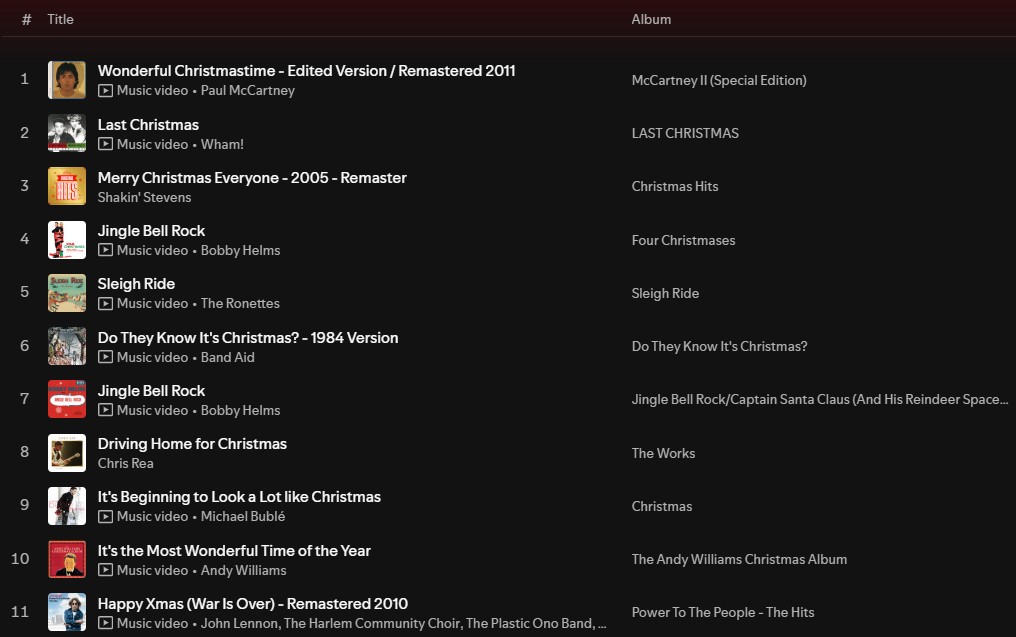
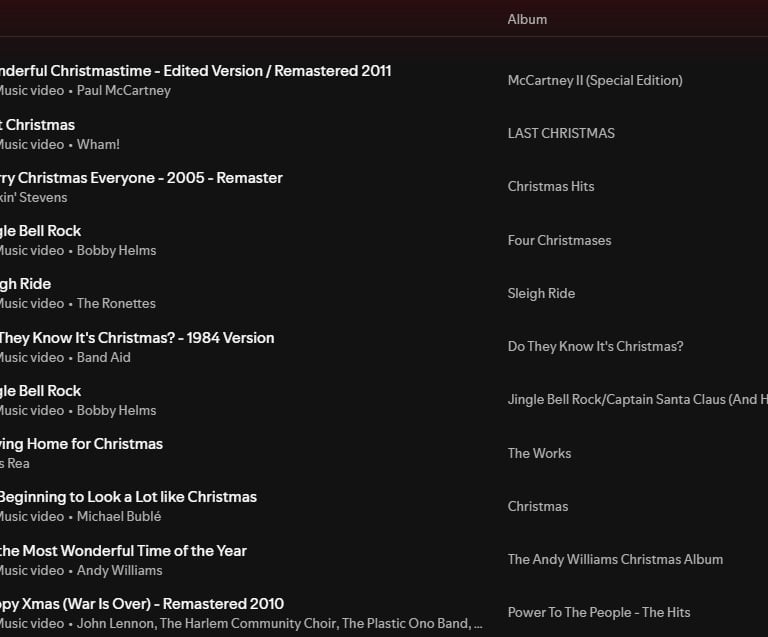
Every December, the UK charts transform into a festive battleground where Mariah Carey, Wham!, Shakin’ Stevens and countless other classics dominate once again. New Christmas releases appear every year, often backed by major labels, celebrity features and glossy marketing campaigns. Yet almost all of them fail to break through. Instead, songs from the 70s, 80s and 90s continue climbing back up the charts, sometimes outperforming modern pop stars at the peak of their careers.
So why do old Christmas songs keep winning? The answer lies in a mixture of nostalgia, playlist algorithms, psychology, marketing and the way we consume music in the streaming era.
Nostalgia Always Wins at Christmas
Christmas is one of the most nostalgia-driven periods of the year. People want music that reminds them of childhood, family gatherings, school concerts or the mood of Christmases long past. That emotional familiarity gives older songs a huge advantage. When listeners decorate the tree or drive home for the holidays, they reach instinctively for what they already know and love.
There’s also a generational loop at play. Parents play the Christmas songs they grew up with; those songs become the soundtrack to their children’s memories, and the cycle continues. That’s why Wham!’s “Last Christmas” still enters the Top 10 every December, even though it’s now four decades old. It’s no longer just a song; it’s part of British Christmas culture.
Streaming Algorithms Push Familiar Favourites
Streaming services play a huge role in keeping old Christmas hits at the top of the charts. Spotify, Apple Music, Amazon Music and YouTube don’t curate Christmas playlists from scratch every year. Instead, they rely on data, and the data overwhelmingly tells them that people want the classics.
When millions of listeners play the same older songs every December, the algorithm responds by pushing those songs even more aggressively. Popularity becomes self-reinforcing. Once a song is labelled a “Christmas favourite”, it gets automatic placements in top playlists like Christmas Hits, All I Want for Christmas, Classic Christmas and the UK-specific seasonal chart lists. New songs simply cannot compete with the volume of streams these playlists generate.
It’s the same effect that propels Mariah Carey’s “All I Want for Christmas Is You” to Number 1 some years. One algorithmic push can mean tens of millions of streams in a matter of days.
Radio Still Favour the Classics
Despite the dominance of streaming, radio still matters at Christmas. Heart, Magic and BBC Radio 2 all switch to heavy Christmas rotations during December, and they overwhelmingly favour the classics. Radio programmers know their audience wants familiar comfort, not experimental new jingles or modern reinventions.
This creates a powerful feedback loop. If radio will not support a newer Christmas single, that single has little chance of gaining broader recognition. Without recognition, it struggles to earn its place on the big streaming playlists, and without playlisting, it also struggles to accumulate streams. In contrast, the classics receive both radio support and streaming dominance, reinforcing their position year after year.
Modern Artists Avoid Being “Cheesy”
Another overlooked factor is that many modern artists simply do not want to make Christmas music. They fear it will make them look cheesy or out of touch with their core style. For every Ariana Grande or Sia willing to release a festive album, there are dozens of artists who actively avoid seasonal music altogether.
This means there are actually far fewer new Christmas releases than you might think. And the ones that do come out often blend contemporary pop with festive themes, rather than leaning fully into the Christmas sound that listeners associate with the classics. The result is a distinct lack of strong contenders capable of breaking through.
It Takes Years for a Christmas Song to Become a Hit
One of the biggest misconceptions about Christmas music is that you can release a song in December and expect it to chart straight away. In reality, most enduring Christmas hits took years to build momentum. Even Mariah Carey’s iconic track wasn’t an immediate phenomenon; it grew gradually over time until the streaming era amplified it into a global tradition. Very few modern songs are given enough time, budget or exposure to build this kind of longevity.
Christmas Music Is Part of the Back Catalogue Economy
Older Christmas songs also benefit from an industry phenomenon known as “the back catalogue boom”. The value of music catalogues has skyrocketed in the last decade, largely due to the predictable revenue generated by evergreen hits.
Festive songs are some of the most predictable and profitable of all. “Fairytale of New York”, “Driving Home for Christmas”, and “Step Into Christmas” generate massive royalties every single December without any new marketing. Investors and labels love these songs because they behave like reliable financial assets. As a result, they receive significant ongoing promotion, further cementing their dominance in the charts.
TikTok Can Make a Christmas Classic Even Bigger
Interestingly, TikTok doesn’t necessarily help new Christmas songs break through, but it does amplify existing ones. Viral trends often revolve around older festive songs because they have instantly recognisable intros and nostalgic appeal. When an old Christmas song goes viral on TikTok, it drives a surge in searches, Shazams, and streaming, giving the track another boost.
A perfect example is the resurgence of Brenda Lee’s “Rockin’ Around the Christmas Tree”, which reached Number 1 on the US Billboard Hot 100 in 2023 (65 years after its release!), largely due to TikTok and playlist algorithm momentum.
So, Will a New Christmas Song Ever Break Through?
It’s absolutely possible, but it’s rare. A modern artist would need:
a genuinely great song with emotional pull
strong label backing
strategic playlisting
TikTok momentum
radio support
and time; usually several years of December growth
There is room for new classics, but the market is incredibly slow-moving. Unless a new track becomes part of popular culture, it cannot compete with the multi-decade-long traction behind the classics.
Why Christmas Will Always Belong to the Classics
The Christmas charts aren’t just about music; they’re about memories. Old festive songs feel timeless because they connect generations, spark emotion and provide a sense of continuity. The streaming era has only strengthened this cycle, giving classic Christmas music a permanent presence at the top of the charts.
As long as families continue to pass these songs down, and algorithms keep rewarding what listeners return to year after year, the classics will remain unbeatable. New artists can still try, and occasionally succeed, but the festive crown will almost always belong to the past.
Sitemap
Gateway House,
4 Penman Way,
Enderby,
Leicester
© 2026 Music Mogul Marketing | All rights reserved.
Contact Details